Simplify the Process

Do you talk about going above and beyond for your customers?  Do you ask your team to make each client feel special?  And do you make it easy for them to do so.

On my recent visit to Zappos, I learned that one of their secrets is to simplify the process.  

Their goal is to make a Personal Emotional Connection with everyone who calls. Rather than the usual metrics, they use the “Happiness Experience Form" and track things like:

  • Did the agent try twice to make a personal emotional connection (PEC)?
  • Did they keep the rapport going after the customer responded to their attempt?
  • Did they address unstated needs?
  • Did they provide a “wow experience?”

And along they way, if they discover an opportunity to make that customer's day - they use the handy dandy PEC station right beside their desks. There are a variety of thank you cards, flower, cookies or balloon order forms, construction paper and colorful pens and a mailbox to get those personal touches out to customers right away.
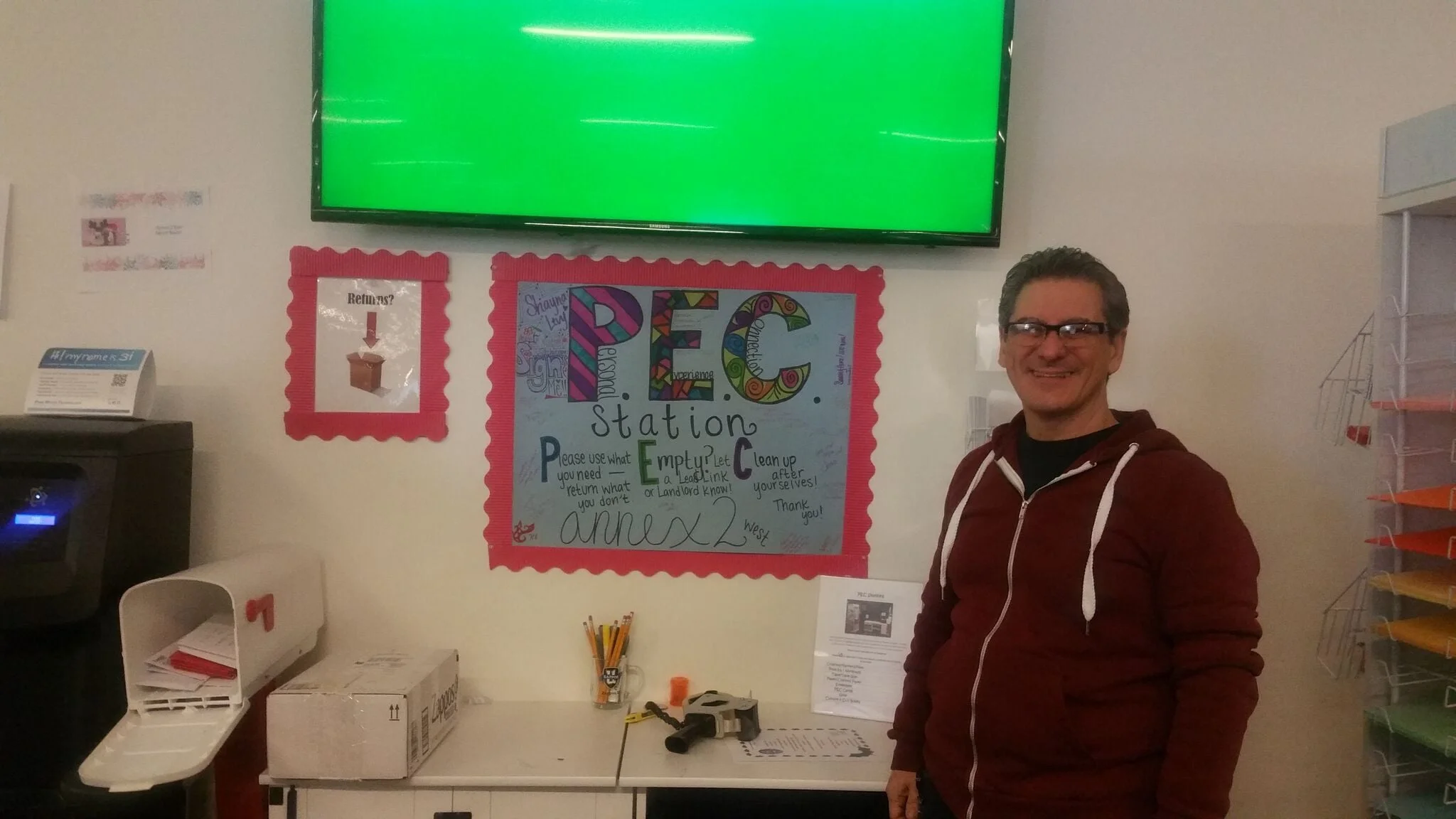
That's Tony, the godfather, my tour guide.  

That's Tony, the godfather, my tour guide.  

Zappos knows that emotion drives people to share with others and they've simplified the process to make those connections. How do you make it easy for your team to go above and beyond?

Body Language

We hear with our ears, but believe with our eyes - which means, what they see is important. As a leader, you will be more effective if you can convey a non-verbal message that matches your verbal message.  That means checking your body language when you are about to offer feedback, run a meeting or ask for their input. 

Here's your 6-point checklist:

  1. Head - held straight for confidence or tilted to show listening - check
  2. Eyes - focus on the triangle of their face (eyes up to forehead) - check
  3. Expression - smile for good news.  If it's not, a frown is best to show concern - check
  4. Shoulders - down and relaxed, exuding calmness - check
  5. Hands - uncrossed arms, open gestures - check
  6. Feet - planted - check

Super, you look the part.  Now, what are you going to say?

More than just a resolution

It's that time of year when we make resolutions. This tip is to help your new goals stick.

Think about something you wanted to do, but didn't: go to the gym, clean the garage, write a thank-you note.  Why didn't it happen?  Chances are, your powers of rationalization were so strong, you talked yourself out of doing it.  “I’m too tired, the garage isn’t really that bad, or it can get done tomorrow”.
 
The way around this is to make your goal specific.  "I will go to the gym at 6 am and I'll put my shoes by the door." Or, "I will clean the left wall of the garage on Saturday at 2 pm." Having the specifics makes it more concrete and harder for your brain to argue.
 
What goals have you agreed on with your team?  This tip can help at work, too.  Give your team specific outcomes so they can argue with their brains better. Ask them how they will accomplish the goal, so they can map out the path to their success.

Happy New Year!  

New Year Girl


'Tis the Season

Whether you are big or small, you cannot give good customer service if your employees don’t feel good about coming to work. ~Martin Oliver

This time of year brings a lot of added stress for a number of reasons, coming to work shouldn't be one of them.

Take a moment to check in with your team. It's as simple as slowing down and focusing on them.  In fact, ask them, "What do you need from me?"

Just asking can do a world of good. 

Special Note:  We're holding a Pay it ForWARD contest on Facebook.  There are individual and office prizes to be won.  Simply share a pic or just post and tell us what you've done for someone else.  If you've not already found us on Facebook, here we are:   Click here

The Case Against Multi-Tasking

December is the busiest month of the year - shopping, travel, family and work gatherings, you name it.  Multi-tasking does not even begin to describe it.

Is multi-tasking the norm in your office?  Do you encourage it? 

Glenn Wilson of the University of London says trying to perform just two simple tasks while sitting at your desk, such as texting and writing an email, could take 10 points off your IQ! 

How bad could 10 points be? 

Some of us can’t afford to lose the 10 points, in fact, it's the equivalent to losing one night’s sleep, or as Peter Bregman of The Harvard Business Review put it, “twice the equivalent of smoking marijuana."

Now ask yourself, "who on my team has an IQ that would be better if we lowered it by 10 points?"

Maybe multi-tasking isn't the best norm.


Mind the Gap

Ah millennials... seems everyone is excited, interested or concerned about how to manage this new group of people in the workplace.  

The good news is, we've got a terrific course that offers insight into who they are, what they need and how to manage them.  Ask us about Mind the Gap:  Managing Millennials.

In the meantime here's a tip.

Think "train and transfer" rather than "sink or swim."

If you are a Baby Boomer, you grew up having to jockey for position with everything you did. Chances are, you thrive on competition and the 'sink or swim' model worked for you when you were new.

But consider this.  

Millennials grew up in a collaborative environment with rewards and recognition for their achievements.  Sink or swim will be demotivating to them and frustrating for you.

And, the largest book store isn't a store (Amazon), the largest hotelier doesn't have any hotels (Airbnb), and the largest taxi company doesn't own any taxis (Uber). We're in the knowledge economy.  Our jobs are more complex. 

So, train and transfer.

'Train and transfer' means taking that task you want them to complete, breaking it down into smaller pieces and giving them opportunities to shine bit by bit.  When they master one chunk of the task, they will feel more confident and you will see their value.  

That's a win-win.